Where I Stayed
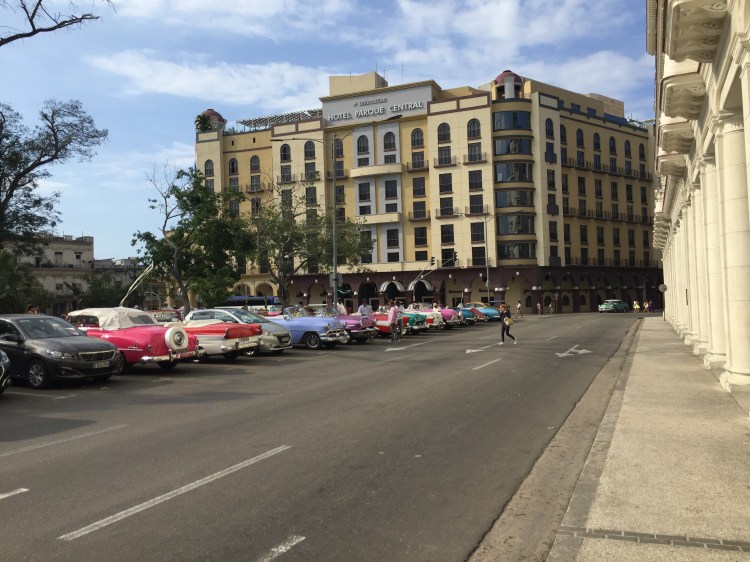
Unlike the other countries I visited, Cuba does not contain hostels brimming with tourists. Instead, you stay in Casa Familiars, wonderfully looked after homes of local Cuban people. Since Cuba decided to allow more tourists to enter its tiny Island, tourism has become one of the most profitable forms of income for any Cuban. This can be seen with the Casas, where families will never have an empty house.
I stayed in a wonderful Casa in the outer barrio of Vedado, a more modern but, in my opinion, a more authentic area of Havana. The family were nothing short of perfect. The mother and father, Yanya and Roberto, were incredible hosts, with a knowledge of their local area that allowed me to truly experience Vedado as if I were a local. Their house was also larger than most, which allowed for a larger amount of travellers to stay. I met a varied array of them, ranging from America and Canadian, to German and Swiss. Without exaggeration, that family made my experience in Havana, and essentially Cuba, and I hope I can return to them as soon as possible.
Vedado
Vedado is definitely not what you think of when you picture Havana, leave that to Habana Vieja and Centro Habana. However, I would recommend anyone who visits Havana to stay in Vedado. Even though it’s further out from the centre, I quickly realised that’s exactly where I wanted to be.
Vedado is a much more modern district that the more central partners. The real growth of Vedado began in the 1920s and continued through to the 1950s. In many way it resembles some nondescript quadrant of a North American city, if construction halted in the mid-20th Century. What it lacks in architectural and historical beauty, it certainly makes up for with its rich culture. It is the hub of bars and nightclubs, along with local restaurants that serve simple but delicious meals at a price of around £1.50. In fact it is the reason I really fell in love with Havana. With the help of my hosts, especially Roberto, I was able to almost completely explore all that Vedado had to offer.
Fábrica de Arte Cubano (Fabrica)
I could wax lyrical about Fabrica for pages if it made sense, but I don’t even think that would do it justice. Fabrica is essentially an old factory on the outskirts of Vedado turned into a club/concert hall/bar/exhibition hall. If that sounds confusing it definitely should. However, once you enter this incredible establishment, everything makes sense. As the queue edges ever closer and you finally get a glimpse of the entrance, you are greeted by an enormous buzz of sound, and the incredible art instalments that hang on the walls. Your first port of call as you enter is the bar to your left, and for good reasons, they serve Mojitos in three sizes, Small, Medium, and of course, Large. They are famed for their large mojitos, which are the size of an English Pint, lethal. Once you’ve got yourself a drink you’re free to venture into any of the many caverns of Fabrica.
I ended up going to Fabrica three times in the week that I stayed in Havana, often as an impromptu tour guide for the new travellers at the Casa. Everytime I went I followed a similar route. I would visit the galleries first, taking in the beautiful and often bizarre art instalments, all created by Cubans. The main art feature when I visited was by a middle age Cuban man. It consisted of some self portrait photographs that definitely deserved a second glance, and a collage of his room, with what we could only decipher as a separate prostitute either naked or barely clothed. It was so far from what I imagined of this constrictive country, and something that amazed me even further. Once I’d finished with the art I moved on, with different companions every time, to the many different concert halls. The main one, set with a large stage and a bar at the back, was adorned with posters of almost exclusively western artists. A very surreal moment for me was when a Cuban cover band sung “Comfortably Numb” by Pink Floyd, a favourite of mine.
Fabrica is a venue that is almost impossible to properly explain and any attempt would fall short of its greatness. If you are ever in Havana you have to visit, and I am sure you will find yourself going back to there once or twice more.
Fusterlandia
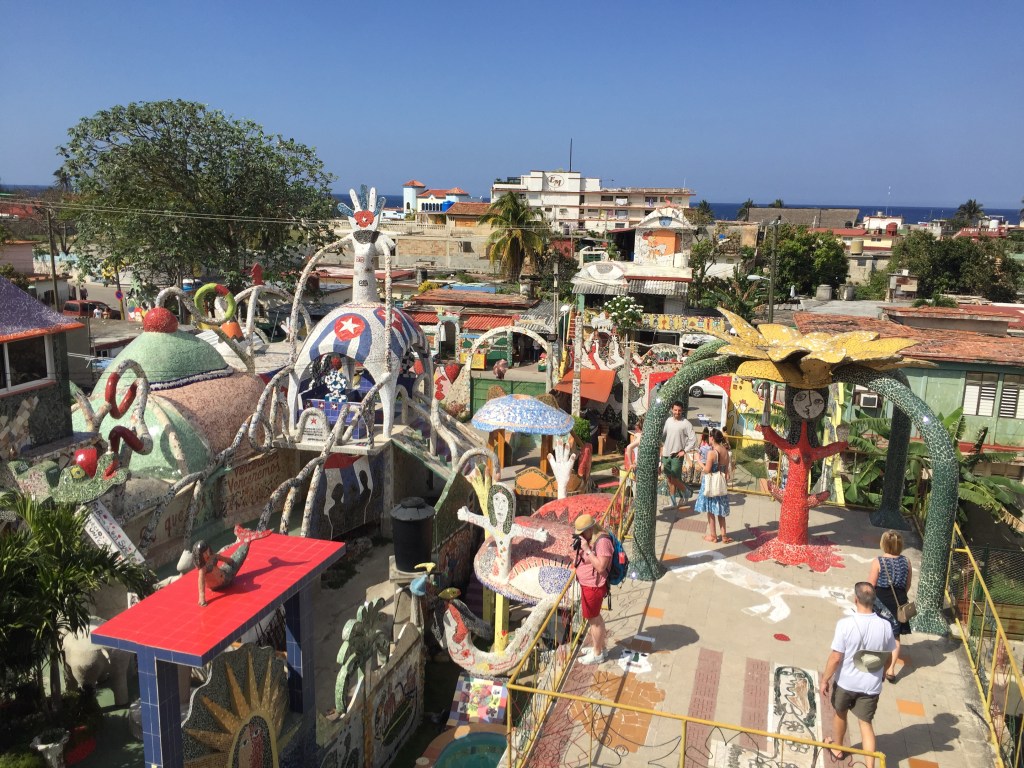
Fusterlandia is a nickname given to a small fisherman town on the outskirts of Havana. But it is so much more than just fisherman town. In 1975, artist Jose Fuster moved into a small run down house in Jaimanitas. He decided to decorate his house in colourful mosaics. Eventually, he decided to expand this artistic feat beyond his modest four walls. He asked if he could also decorate neighbours houses. He decorated bus stops, offices and created incredible sculptures that linked the town together.
Today it has become a popular (but often overlooked) attraction for tourists in Havana. It’s distant location, far from the touristy streets of Centro Habana could explain why it does not experience the traffic it deserves. It really is something to behold though. It is free to wander and climb about the structures, with only the polite question of a donation to help Jose continue his work, and the chance to buy individually designed mosaic tiles by the artist himself.
Jose Fuster is still creating stunning mosaic creations today, and throughout the city you can witness his plans for future projects, or projects he’s currently engaged in. As a result of this ever expanding pueblo of mosaics, it feels like creativity is constalty progressing, rather than viewing an archaic attraction. The fact that people live in all these tiled buildings also helps to make every installation come alive with the sociable and engaging culture of Cuba intertwined with the skill and beauty of an artist.
Hemingway Pier
Hemingway Pier, created in early 1950s before Castro and Guevara took over, is a shell of its former self. The pier itself is desolate and decrepit. Myself and a friend visited a pizza restaurant on the pier, the only existing restaurant left. It was definitely worthy of a return but gave us a good picture of a world that had been left behind a long time ago and would soon disappear altogether.
There is one solitary hotel on the pier, named El Viejo y El Mar, after Hemingway’s most famous book “The Old Man and the Sea”. It resembles the rest of the pier, decrepit, lifeless and archaic. The only reason I am even writing about this pier and its features is because it is where I saw one of the nicest sunsets of my whole 5 months away.
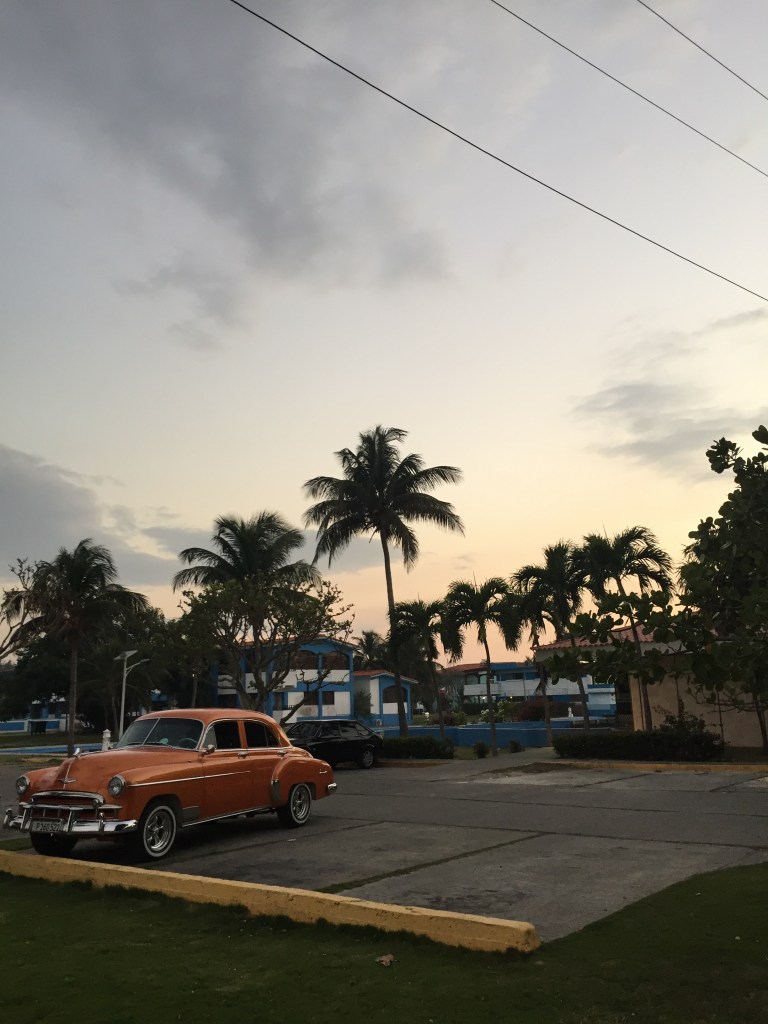
You are granted an unrestricted westerly view, perfect for watching the sun set. What also ends being a positive is that there is no one else there, it’s practically deserted. This grants you a private sunset viewing of incomparable quality. If you find yourself near this pier (probably because you’ve just been to Fusterlandia, located a couple of streets east), stay for the sunset, and then jump in a collectivo that will take you back to the busses and back to your Casa. It is also where I saw the most incredible looking classic ‘Cuban’ car.
Malecón
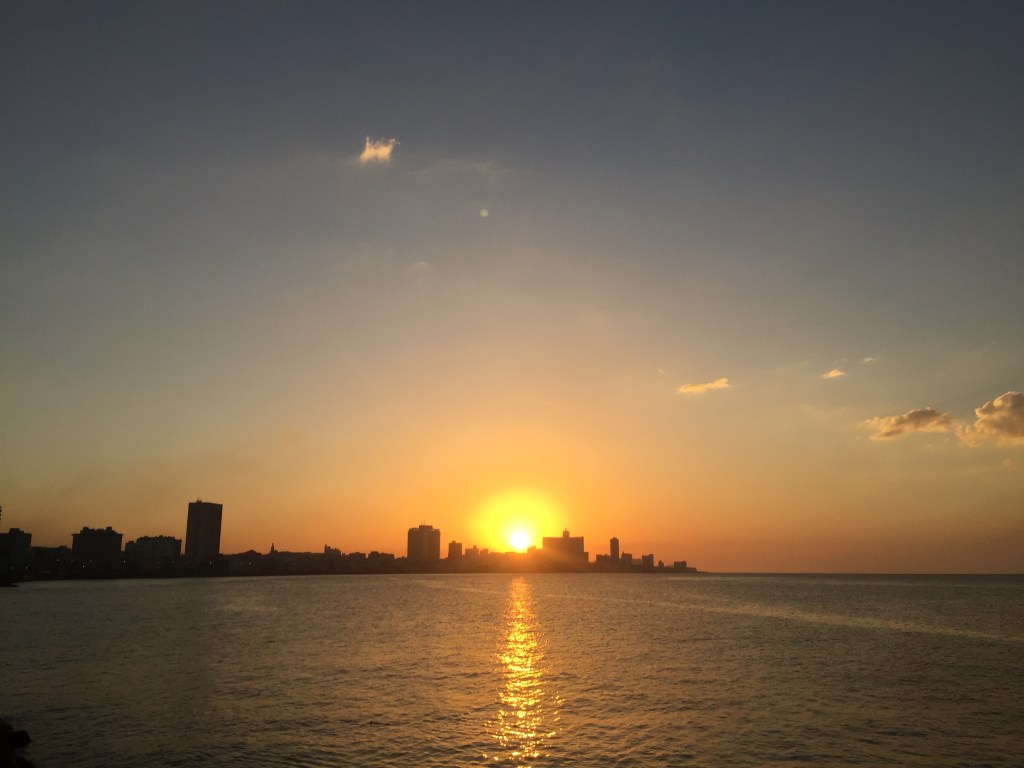
Havana’s Malecón stretches an impressive 5 miles along its coast, beginning in the harbour of Old Havana and ending on the outskirts of Havana’s main city. I had the pleasure of visiting the Malecón just as the sun was setting. I have to say it was one of the best sunsets I witnessed my whole trip, with the sun slowly disappearing behind the skyline of Centro Habana. I then walked almost the whole length of it back to my Casa which was in Vedado. Along that walk I witnessed almost all of Cuba’s culture condensed into an hours walk. I passed young cuban teens dancing to modern music, old men casting their rods out to sea, and about everyone else in-between.
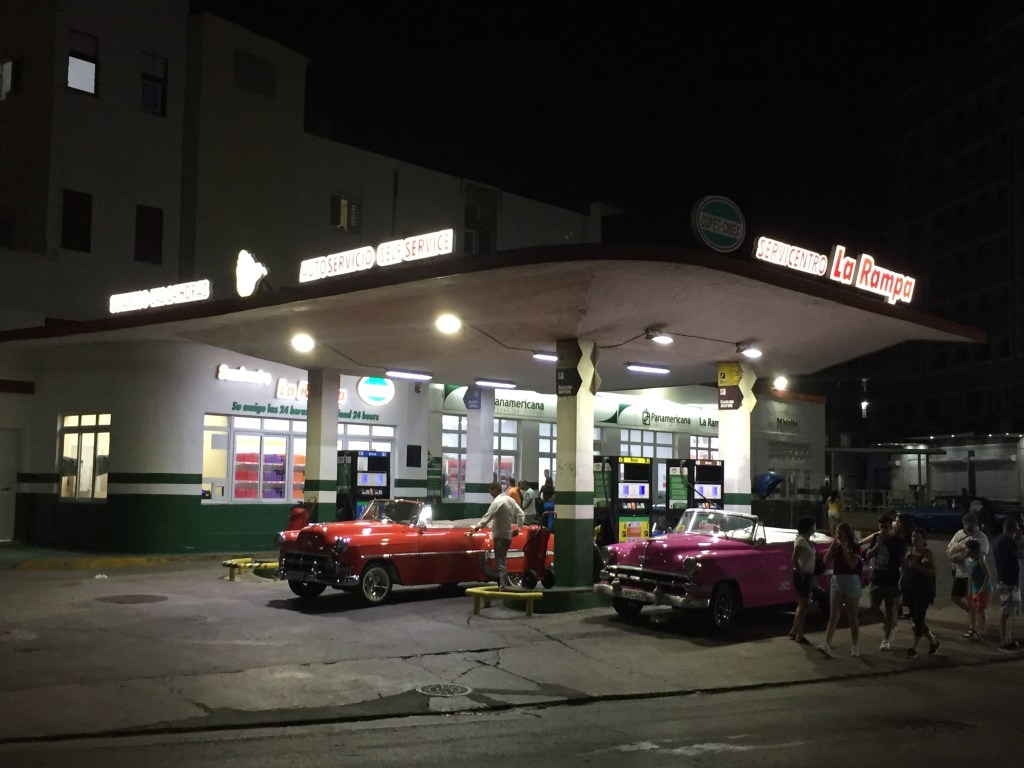
What was most special was when I happened to pass a petrol station. Two classic ‘Cuban’ cars were refilling their tanks, which transported me almost immediately to about 50 years ago. Stepping into the petrol station, however, introduced me to the reality of Cuba in the modern age. The shelves were stocked sparsely, with barely anything to make a complete meal out of. Their were also around 5 freezers in a side room that were all completely empty, but it did not stop local customer stepping over to check for sure there was nothing that could not be purchased. It a truly eye opening experience even though it was just a small window into the everyday lives of Cubans in the 21st Century.
Colon Cemetery
Colon Cemetery is held in many people’s opinion, to be the most important historical cemetery in Latin America. It stretches a blisteringly impressive 500,000 square metres, and has over 500 large mausoleums, with many more graves and smaller mausoleums spread out throughout the cemetery.
When I visited I was blown by its size, taking up a large proportion of the outer area of Vedado. The main road was immaculate, with incredible structures dedicated to politicians and royalty long dead. As I wandered the narrow alleys of mausoleums I noticed very prevalently, however, how many of these once regal and ornate buildings were a shadow of their former self. Most of the less important areas had either been grave robbed, ransacked, or just vandalised. It gave you a sense of a world that had been left behind, and especially since the growth of Socialism in Cuba, probably despised for their ornate depictions of wealth and status. I found myself lost, both physically and with awe in the enormous cemetery and it is one definitely worth visiting.
The local restaurants and bars
During my time in Havana I visited a variety of restaurants and bars. Before I left to Cuba I was warned about the quality and range of Cuban food. I was told by my close friends, who had visited a year previous, that the food on the plane would be the last good food I would have. I am happy to say that all my fears were dispelled by the first meal I ate. Below you’ll find the restaurants and bars that left an impression on me and ones that I would recommend visiting.
El Chancullero
By far the best restaurant I ate at during my time in Cuba, El Chanchullero holds classic Cuban food close to heart, while experimenting with new combinations and presentations that are only emerging in Cuba now. It is where I had my first encounter with Ropa Vieja, which translates to shredded beef, a dish so delicious that whenever I had the chance to reacquaint myself with it I would. It’s a small restaurant set in Habana Vieja, just off of a lively square. There is often the need to wait in a queue for a table, but once you’re in it’s definitely worth the wait. Myself and a friend sat their for around 2 hours, enjoying the food, the atmosphere and the delicious margaritas. If there was one restaurant I wish I could return to, this would sit extremely high on that list.
La Casa de Bombilla Verde
Set in the side streets of Vedado, La Casa de Bombilla Verde is an unsuspecting live music bar filled with young local Havanians. Visible only by the green light that hangs next to its entry, once inside it is an atmospheric theatre of music. When I visited there was a young woman singing with an incredible voice. She was surrounded by family and friends that would cheer her almost immediately after each song. It was an atmosphere that is inescapable and I could have sat there for hours listening with a Margarita in hand, if only there were any seats available. It is small, but has such a distinct personality that it warrants a return.
El Jardín / Come y Come
These restaurants are very similar in many ways, but still deserve a mention, hence why I have grouped them together. They are local Cuban restaurants that serve basic Cuban food, consisting of a lamb chop or chicken, rice and beans. That may not sound at all interesting to read, but the flavour that they marinade the meat with, and what they do with the sides of beans really makes every dish come alive with flavour. I found that I went back to both these places whenever I felt like a quick but delicious meal. If you do go to either of these restaurants do not be surprised if they are out of any ingredients, especially later in the night. On seperate nights I found them to be out of beans, rice, and meat, luckily never all at once. As delicious and cheap these places are (£1.50 for a dish), never, ever, get the pizza…
 A South American Synopsis